A deep-dive into how 240 IoT sensors uncovered hidden waste across Devki Steel's production floor — and paid back their cost in under 11 months.
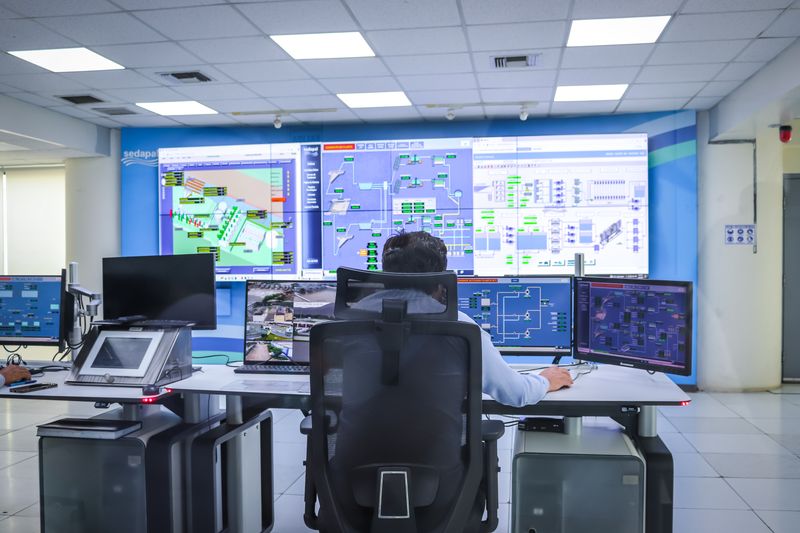
In June 2024, Lean Energy Solutions commissioned a real-time boiler and energy monitoring system across the production facility of a major Kenyan steel manufacturer. The project scope involved deploying 240 IoT sensors across six boilers, four steam distribution headers, twelve heat exchangers, and the compressed air network. Data from all sensors streams in real time to a cloud-based energy management platform, with automated alerts for anomalies, trend deviations, and inefficiency thresholds. Twelve months after commissioning, the quantified energy savings stood at KES 8.2 million — against a total project cost of KES 7.4 million, giving a payback period of 10.8 months.
What 240 Sensors Found in the First 90 Days
Within the first three months of operation, the monitoring platform had identified nine significant waste streams that were invisible under the previous manual monitoring regime. The largest single finding was a systematic pattern of steam bypassing heat exchangers on boilers three and four during morning startup — a control valve sequencing error that had gone undetected for an estimated two years. Correcting the sequencing logic reduced fuel consumption on those two boilers by 8.3 percent. The second finding was a group of eleven steam traps on the secondary distribution header that were showing continuous blow-through — a failure mode where traps pass live steam rather than only condensate. Replacing those traps recovered KES 1.4 million per year in fuel cost alone.
The monitoring system's compressed air module identified a leak load equivalent to 18 percent of total compressor output — significantly higher than the 8 to 10 percent that the maintenance team had estimated from manual rounds. Ultrasonic leak detection during a planned shutdown, guided by the monitoring data which had localised the highest leak concentrations to specific pipe sections, found 34 individual leaks above 0.5 bar-litre-per-second. Repairs were completed in a single weekend shutdown. Compressed air energy consumption fell by 16.2 percent in the following month, saving KES 680,000 annually at the facility's electricity tariff.
The KES 8.2 Million: Where It Came From
The year-one savings of KES 8.2 million broke down as follows: boiler fuel savings from improved combustion control and corrected steam bypassing, KES 3.1 million; steam trap replacement and condensate recovery improvement, KES 1.4 million; compressed air leak repairs, KES 680,000; improved heat exchanger performance from optimised flow control, KES 890,000; reduced boiler blowdown losses from automated TDS control, KES 420,000; and overtime and maintenance labour savings from reduced emergency breakdowns, KES 1.71 million. The labour savings are often overlooked in IoT monitoring ROI calculations but they are significant: the monitoring system generated 23 predictive maintenance alerts in year one, of which 19 were acted on before equipment failure. The four that were not acted on in time resulted in unplanned downtime events; the nineteen that were acted on in time avoided an estimated 14 days of production disruption.
The lesson from this manufacturer's experience is transferable to any Kenyan manufacturing facility running boilers, compressed air systems, and process heating. The waste that real-time monitoring uncovers is not the result of poor engineering or negligent operation — it accumulates invisibly over time, in the gaps between manual monitoring rounds and in the complexity of systems too large to watch with human attention alone. IoT monitoring does not replace skilled engineers; it gives them the data resolution to find and fix problems that manual inspection will always miss. The capital cost of a monitoring deployment at a typical Kenyan mid-sized factory is KES 2 to 5 million. At the savings rates we see on similar sites, payback periods of 8 to 14 months are the norm, not the exception.
James Otieno
Energy Specialist, Lean Energy Solutions Kenya