The grid-tied rooftop system will offset 78% of the facility's peak daytime electricity demand and save KES 14M annually.
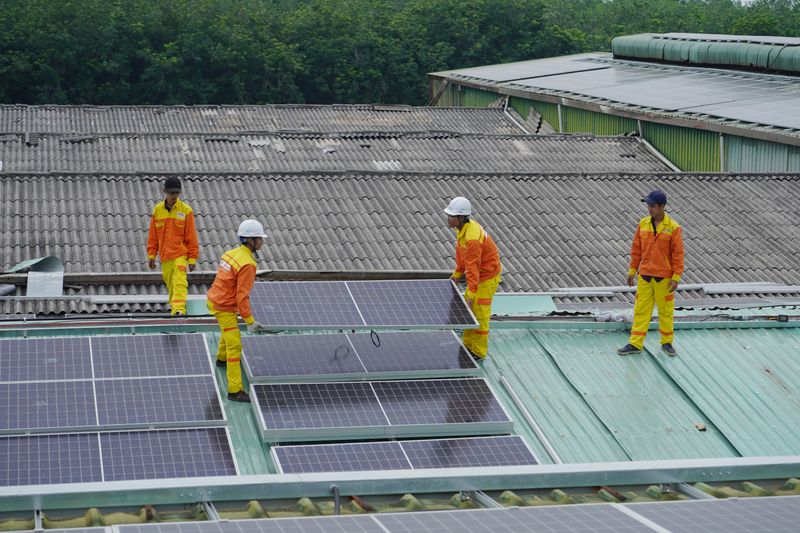
Lean Energy Solutions Kenya is pleased to announce the successful commissioning of a 2.4 megawatt peak grid-tied rooftop solar PV system at a leading manufacturing and assembly facility in Industrial Area, Nairobi. The system, which comprises 5,280 high-efficiency monocrystalline panels across four roof sections totalling 14,200 square metres, was energised on 11 April 2026 following a 19-week engineering, procurement, and construction programme. At commissioning, the system produced 2.31 MW under clear sky conditions — within 4 percent of modelled peak output, which our engineering team considers an excellent result for a rooftop installation of this complexity.
System Design and Engineering Highlights
The installation presented several engineering challenges characteristic of large industrial rooftop deployments in Kenya. The factory roof is a multi-section corrugated steel structure with varying pitch orientations and a substantial amount of roof-mounted mechanical equipment that required careful shading analysis and panel layout optimisation. Our engineering team used three-dimensional modelling software to produce a shadow analysis for every hour of the year before finalising panel placement. The structural load analysis confirmed that the existing roof steelwork could support the added panel weight without reinforcement on three of the four sections; one section required targeted reinforcement at a cost of KES 1.2 million, which was included in the project budget.
The system uses 12 central inverters, each rated at 200 kW, connected to the factory's 11 kV internal distribution system via dedicated step-up transformers. String-level monitoring provides real-time performance data on every row of 20 panels, enabling rapid fault identification and performance benchmarking. The monitoring data is integrated with the factory's existing building management system, giving the client's energy team a single dashboard view of solar generation, grid consumption, and net import across all three shifts. In the first week of operation, the system generated an average of 10,840 kWh per day — tracking very closely to the 11,100 kWh daily average modelled for April conditions in Nairobi.
Financial and Environmental Impact
At the facility's applicable KPLC commercial tariff of KES 23.40 per unit, the 2.4 MW system is projected to save KES 14.2 million per year in electricity costs when combined with net metering credits for surplus generation exported to the grid during periods when factory demand is below solar output. The KPLC net metering agreement, which took 14 weeks to negotiate and commission, allows the client to carry forward monthly export credits and offset them against grid consumption charges. The system is also projected to reduce the facility's Scope 2 carbon emissions by approximately 2,800 tonnes of CO2 equivalent per year — a figure that will be relevant as Kenya develops its voluntary carbon market under the Carbon Markets Bill 2026.
LES Kenya Communications
Energy Specialist, Lean Energy Solutions Kenya