Yash Kolhatkar, Business Head – East Africa at Lean Energy, explores how biomass can help manufacturers reduce dependence on fossil fuels, manage energy costs and build more resilient, lower-carbon thermal energy systems.
For manufacturers and processors, energy has always been a business-critical input. What is changing is the level of scrutiny now being placed on where that energy comes from, what it costs and the environmental footprint associated with producing it.
This is particularly important when it comes to thermal energy. Across industries such as food and beverage, dairy, healthcare and manufacturing, steam is integral to everyday operations, supporting processes ranging from heating and sterilisation to cleaning and production. For many businesses, however, that steam is still generated using heavy fuel oil or diesel, leaving an essential part of the production process exposed to fossil-fuel prices, foreign exchange movements and carbon emissions.
As businesses look for ways to remain competitive while responding to growing expectations around decarbonisation, thermal energy can no longer be treated simply as an operational matter confined to the boiler room. The decisions companies make about how they generate steam have increasingly direct implications for cost, resilience and long-term business performance.
Much of the energy-transition conversation has understandably focused on electricity and the growth of renewable power. Yet for industries with significant heating requirements, addressing electricity alone only tells part of the story. If industrial decarbonisation is to progress meaningfully, the way businesses generate thermal energy also needs to change.
The changing economics of fossil-fuelled steam
Heavy fuel oil and diesel have long been familiar choices for industrial boilers because the technology is established and businesses understand how these systems operate. What has become more difficult to manage is the exposure that accompanies continued dependence on these fuels.
International oil prices are influenced by events far removed from the markets in which East African manufacturers operate. Currency movements add another layer of uncertainty, particularly for businesses whose revenues are primarily local while a significant portion of their energy costs is linked to imported fuel. When these costs rise unexpectedly, manufacturers have limited room to absorb them without placing additional pressure on margins or passing some of the increase down the value chain.
At the same time, the expectations placed on businesses are changing. Customers, investors, regulators and multinational supply chains are paying closer attention to how companies manage their environmental impact, which means energy choices are becoming increasingly relevant to both sustainability commitments and commercial relationships.
The question for manufacturers is therefore becoming broader than how to secure reliable steam at the lowest possible cost. It is also about how to build an energy system that is better insulated from external shocks while supporting the company's longer-term decarbonisation goals.
Where biomass changes the equation
Biomass offers one practical pathway towards achieving this balance, particularly in markets such as East Africa where agricultural activity creates a range of residues that can be recovered and put to productive use.
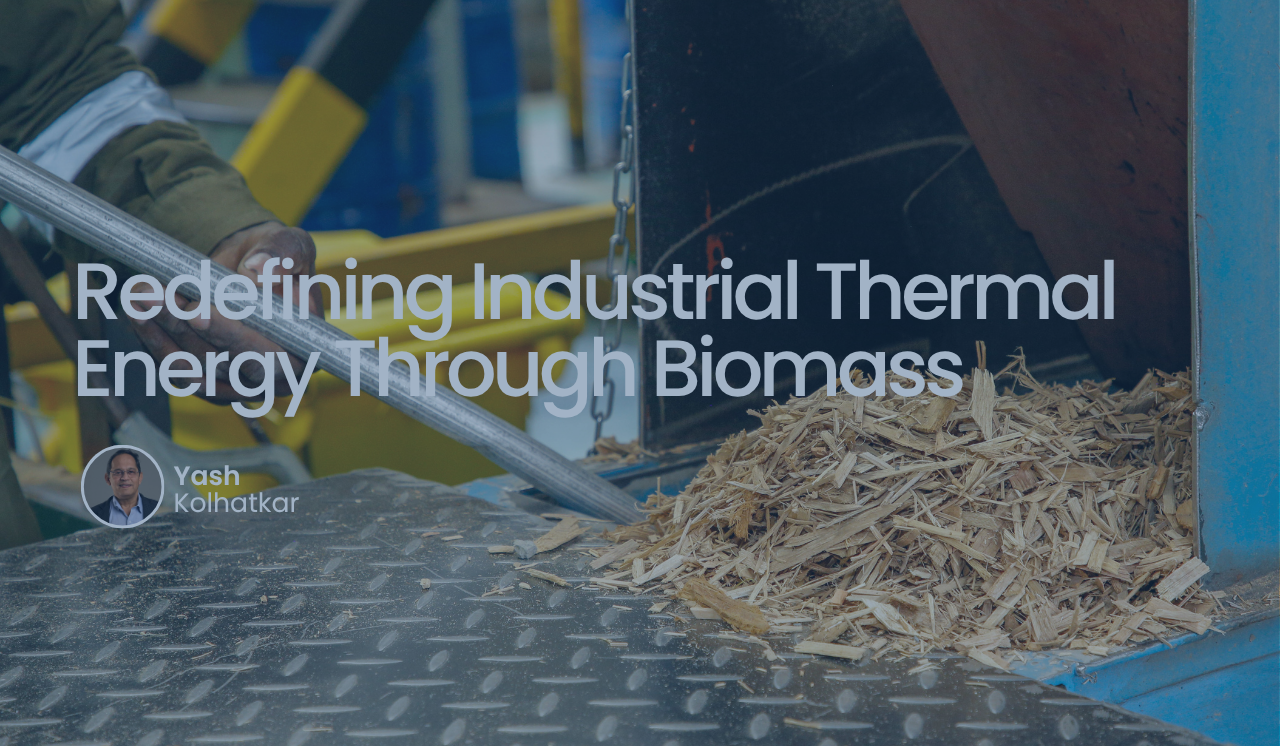
Materials such as maize cobs and coffee husks, alongside processed biomass fuels such as briquettes and pellets, can be used to produce the steam required for industrial processes. When responsibly sourced and supported by the appropriate technology, these fuels create an opportunity for manufacturers to reduce their dependence on conventional fossil fuels without compromising the thermal energy required for production.
There is an important commercial dimension to this transition. A greater reliance on locally available energy resources can reduce some of the exposure businesses face to international petroleum markets and foreign exchange pressures, while creating economic activity within local supply chains through the sourcing, aggregation, processing and transportation of biomass.
It also creates an opportunity to derive greater value from agricultural residues that might otherwise be discarded or used inefficiently. In this sense, the case for biomass extends beyond replacing one source of energy with another; it connects industrial energy demand with a broader circular economy in which resources that may have previously been considered waste can become productive inputs.
However, the growth of biomass as an industrial fuel needs to be approached carefully. Renewable does not automatically mean sustainable, and the environmental value of biomass depends significantly on how and where it is sourced.
A credible biomass strategy should prioritise traceable and responsibly sourced feedstock, particularly agricultural residues, while avoiding practices that create additional pressure on forests and other natural resources. Quality, moisture content, transportation and security of supply also matter because industrial customers require consistency; a production line cannot be expected to adjust simply because the fuel supply is unreliable.
For this reason, businesses considering biomass need to look beyond the fuel itself and consider the strength of the entire energy ecosystem supporting it.
Decarbonisation has to work commercially
The case for cleaner industrial energy will ultimately be determined by whether businesses can make the transition without undermining their ability to compete.
Manufacturers make investment decisions within the reality of limited capital and competing priorities. A business may recognise the value of replacing fossil fuels but still need to choose between investing in energy infrastructure, expanding production, introducing a new product line or upgrading other critical equipment.
This is where the commercial model surrounding the technology becomes important.
Rather than requiring manufacturers to finance and manage new energy infrastructure themselves, models such as Build-Own-Operate can transfer the capital investment and operational responsibility to a specialist energy provider. Under such an arrangement, the provider invests in the boiler infrastructure, operates and maintains the system and manages the fuel supply chain, while the manufacturer purchases the steam required for its operations.
At Lean Energy, this approach has shaped how we work with industrial customers across East Africa. The principle is relatively straightforward: manufacturers should be able to access reliable thermal energy without necessarily having to become experts in biomass procurement, boiler operations and maintenance themselves.
Our experience has also reinforced an important point about the industrial energy transition. Technology alone is rarely the barrier. Businesses need confidence that a proposed solution can deliver consistently, that the economics make sense over the long term and that the transition will not introduce unnecessary operational risk.
That is why discussions about decarbonisation need to move beyond the environmental case and engage much more directly with the commercial realities facing businesses. Cleaner energy will scale when sustainability and competitiveness reinforce each other rather than being viewed as competing priorities.
A strategic decision for industrial businesses
Thermal energy is therefore becoming a strategic consideration that deserves attention beyond engineering and sustainability teams. For business leaders, decisions around steam generation increasingly touch on operating margins, capital allocation, supply-chain resilience and the company's exposure to future energy and carbon risks.
Biomass will not be the right solution for every facility, and its effectiveness depends on responsible sourcing, appropriate boiler technology and disciplined operations. But where these conditions exist, it presents a credible option for businesses seeking to reduce their dependence on fossil fuels while maintaining the reliability industrial operations demand.
East Africa's industrial base is continuing to grow, and with that growth will come greater demand for thermal energy. The question is whether that demand will simply deepen the region's dependence on imported fossil fuels or create the impetus to build more resilient, locally anchored energy systems.
For manufacturers, the opportunity is increasingly clear: the transition to cleaner thermal energy does not have to come at the expense of commercial performance. Done well, it can become part of how businesses manage costs, strengthen resilience and position themselves for a lower-carbon industrial future.
Yash Kolhatkar
Energy Specialist, Lean Energy Solutions Kenya